Tuesday, October 9, 2018

The Autobiography of Jan Franz Van Husum


Tuinstraat Today


As I closed the door of our home for the last time, Volkjie, my wife of two weeks said, “Goodbye sweet life.” “What?” I replied, for it had not been sweet or easy. Amsterdam is a city reclaimed from the sea, each day new people arrive, competing for the few scarce jobs and fewer places to live.

I am a seagoing man, able to eke out a living catching mackerel in the cold waters of the North Atlantic, but the catches are fewer and further away. It is not an easy life. Volkje, who once gathered Eider eggs in the marshes of the North Strand and drove geese to the city markets, now sells tulips for farthings in the local market. It is not an easy life.

Hand in hand we left Tuinstraat, and the place we called home.


Thursday, May 3, 2018

Making Dough in America


Introduction


Our cast of characters came by ship from Holland to America, from Amsterdam to Fort Orange, up the Hudson River. They had signed on for four years as indentured farmers and laborers, to work for the wealthy Dutchman, Kiliaen Van Rensselaer, lord of the manor, in a settlement called Rensselaerswyck.

The story could be titled -  What becomes of an old sea captain? And it goes something like this.

Being a blasphemer, a street-scold, a murderer, a contemner of laws and justice, and disturber of the peace, the bakker, Willem Juriaensz is hereby banished, to leave by the first vessel ...


The Baker, Willem Juriaensz


Our first character is Willem Juriaensz (Jeuriaens), commonly called Willem the Baker (Bakker). Once upon a time, Capitaijn, sea captain in 1646 and again in 1650, and likely before. Arriving in the colony in 1638, he worked for Lord Van Rensselaer as a baker, but miscreant that he was, beginning in 1644, sentenced to banishment for misdeeds and then reprieved.

The Chicken Keeper, Jochem Becker

In 1644, Jochem Becker accused the old captain of stealing his hens.

The Witness,  Jacob Willemz

Jacob Willemz took up the captain's side in this story, saying,

"What do you mean? They are the old captain's hens!" 

This he said from the safety of his house. Becker called to Willemz to come out. Willemz wisely refused; Becker rushed in, giving him a sound beating, and grabbing him by the throat, calling him an "old dog".

Defending himself as best that an old dog could, Willemz fought back and called Becker "a dog and a son of a bitch".

The question of whether anyone stole the Becker's chickens, was not, at this time, a question for the court. Nor do we know the outcome of this case, or how the court dealt with the baker.

Once more


In 1647, the old captain was sentenced to banishment to "the Manhattans" for attacking with a knife and murdering one, de Hooges (Antony de Hooges, business manager of Rensselaer's colony.).

Enter the picture Jan Franz Van Husum, aka Jan Van Hoesen


Reprieved, the captain struck up a relationship with Jan van Hoesen, who saw the merit in learning the skill of the baker. So, they entered into a contract dated January 30, 1650 allowing the old captain to live on Van Hoesen's property in exchange for lessons in baking, and a donut or two.

A captain takes no orders.

By November of 1651, the old captain (now 72 years of age) refused to bake, and in consequence, the court gave Jan van Hoesen "permission to occupy the erf" (lot, or bakery) on the condition that the Old Man could live in the adjoining house "ofte de gelegenheijt," as long as he lived.

We must assume that Jan and  his wife Volkje had learned the trade by now, and were busy selling bread and donuts to the other settlers and to the Indians in trade for beaver pelts.

Presumably, Jan and Volkje tolerated the old captain since we do not see Captain Willem Juriaensz appearing in court again. And Jan and Volkje profited from the captain, earning money enough from the bakery to purchase land from the Indians, but that is another story.

Banishment

O'Callaghan, History of New Netherland, 1, pages 437 and 438;
Van Rensselaer Bowier Manuscripts, page 820
.

Monday, August 14, 2017

How Husum got its name


On the Jutland Peninsula on the coast of the North Sea, once part of Nordfriesland, traditionally North Frisia, once part of Schleswig-Holstein, now the city of Husum (North Frisian: Hüsem) is German, the capital of the Kreis District.

How Husum got its name

Bestimmt!

I am speaking with a native of Holland. I tell him my wife's name is Van Huss. He says, sounds German. No, I say, she is Dutch from the German city of Husum, once part of North Frisia. He4 explains that there are several cities in Holland with variations on the word "hus".

And this is how it came to be.

Once upon a time, Holland was farmland and farmers, who got together to talk, spoke of the isolated settlements with a few houses where the cattle and wheat was brought to sell. These "houses" became the market. In time other houses were built and the tiny settlements became larger, but the farmers still refereed to the place as "hus".

Bestimmt!

We both agree that is a logical explanation of how Husum got its name, but there is more.

Husum


Before the name Husum was written down, someone built a house next to a bridge, a few miles inland from the Wadden Sea, where dry land meets the tidal flats and salt marshes. It is good land. Farmers can raise wheat and cattle, along the coast, there are countless geese and shore birds, and access to the sea and the fish that swim in the sea.

In good weather it is a good life. Theodor Storm, the 19th century author from Husum, gave the area this description:

By the grey shore and the grey sea where the fog lies heavy all year long, where the swamping seas come.

Our legendary figure thought he and his family would be safe from the storms, but he was wrong, and it must have happened many times, the storm and the sea surging over the land and then retreating back to sea.

This house was built well. It withstood the storms.

House, hus, huis, haus at Husembro


House, hus, huis, haus at Husembro


The foundation was made of stone to prevent settling and keep out the rats, but because stone was scarce, the main part of the house was built of logs or lumber milled from the trees with a thatched roof to keep out the rain during the long, chilly, windy, and mostly cloudy winters. As is still the custom in a few such houses, the barn were the precious cattle were kept was attached to the house, so as to protect the cattle but also to keep the house warm.

Along the coastline, farmers raised crops and cattle and geese. The coastline was dotted with small fishing villages that fished the North Sea for cod and other fish. And when there was a surplus of these items, the farmers and villagers took their crops and cattle and geese and fish south to the larger cities like Amsterdam where they could be traded for money and necessaries.

Our legendary house stood for many years. Locals would have referred to it as the house by the bridge. And when they spoke in their native languages, Danish, Dutch, German and Frisian, they would have said Hus, Huis, Haus, and Hus. The pastor at the church who wrote in Latin would have changed its spelling to Husem or Husum.

King Abel comes to Husembro

Let us move on now and speak of the first time that history records the name of Husum.

In 1252, it is recorded that King Abel of Denmark lead an army to the coast of the Wadden Sea to impose taxes on the stubborn and independent Frisians who farmed and fished and lived there. Near the bridge by an ancient house, an arrow struck the unlucky king and he died. His death might have been God’s revenge for it is hinted at in the historical records that Abel murdered his brother King Erik Ploughpenny to obtain the throne. History records the place as “husembro” (the house by the bridge).

Now, return again to the history books where it is written that in 1362 a disastrous storm tide, know thereafter as the "Grote Mandrenke," (Great Man Drowning) surged along the coastline, flooded Husum, and carved out an inland harbor. This event put Husum on the map. A seaport developed, businesses came, and houses grew up around the bridge and the house that once stood alone.


Norstrand and Husem


The maps that came in time named this little village and did so in the Latinized spelling, Husem or Husum, which is what it is called today.

Tuesday, March 14, 2017

Who's who in Husum

Who’s Who in Husum: 

Husum, formerly part of Friesland, homeland of the Frisians and a mixture of Angles and Saxons and Dutch, later the Duchy of Schleswig, sometimes Danish and this and that, and now a seaport in northern Germany.


Husum, Google earth, North Sea


Abel, Duke of Schleswig and King of Denmark


He was the son of Valdemar II and brother to Eric IV. In 1250, Eric was murdered while a guest at Duke Abel's residence at Schleswig. Abel took his Eric’s throne after swearing an oath he had nothing to do with the death.

Abel ruled for a year and a half. Hearing that the peasants in Frisia, led by Sicko Sjaerdema, refused to pay the tax levy, he led a punitive expedition and was killed by a wheelwright named Henner on Husum Bridge.

People said, "Abel af navn, Kain af gavn" Abel by name, Cain by claim.

Jan Franz Van Husum


Jan was born in 1608. We may assume that for most of his life, he simply went by the name of Jan, or if further clarification was necessary, Jan, son of Franz. Jancalled himself as a seafaring man. We do not know for certain what fish he caught, but we can guess. As early as 1610, there  were reports of whales off the coast of Spitsbergen. Russians, Basque, French, English, and Dutch ships all vied for the trade. English and Dutch ships were often made up of North Frisians, who were known for their skills at sea.

The whale they hunted for was the bowhead whale, one that yielded large quantities of oil and baleen.

But this is idle thought, what we do know is this.

In 1634, a devastating flood, known as the second Grote Mandränke struck the Frisian coast, destroying the island of Nordstrand and much of Husum. After the flood, Jan would depart for Amsterdam. We know that he married his wife Volkjie there. She too was caught up in the devastaition of the flood, as she lived on the island of Nordstrand with her parents and sister.

Once married, Jan and Volkjie sailed for America.


Theodor Storm

 
Theodor Storm, a 19th century writer who called Husum, “the grey town by the sea.”

Die Stadt (1851)

Am grauen Strand, am grauen Meer Und seitab liegt die Stadt; Der Nebel drückt die Dächer schwer, Und durch die Stille braust das Meer, Eintönig um die Stadt.

On the grey sand, on the grey sea, Besides which lies the city, Press the mists heavy on the roofs, And in the stillness the sea roars, With one sound around tow.

Monday, March 13, 2017

The Marriage of Valentine Von Huss (Vanhooser) and Maria Barbara Zerwe (Zerbe)

[Notes on spelling. Spellings differ by language. The Reverend Stoever was German and chose to spell the name "Von Huss" instead of Van Huss or Vanhooser. Maria Barbara went by her middle name Barbara, a practice of trying to trick the devil. The last name "Zerwe" instead of "Zerbe" suggests that the name was pronounces like the French Servier, a name that appears on the French side of the border. Valentine was also variously called Velten and Felty. My advice to those looking up genealogy is to try various spellings.] 


The Wedding

Valentine Von Huss and Maria Barbara Zerwe were not well-to-do, like Sir William Pepperrell and his family. Most likely, the wedding was a simple affair with family and friends.

It is three days before Christmas, 1746, and the wedding day.

Let us join the families of Valentine Von Huss and Barbara and Catrina Zerwe and John George Meyer as they make their way to the tiny church at Tulpehocken for a double wedding, to be presided over by the Reverend Casper Stoever, America's first ordained Evangelical German Lutheran Minister.

Nearby Indian Fort on Mill Creek


Records of Rev. John Casper Stoever : baptismal and marriage, 1730-1779 (page 61)


The ceremony took place at Christ Little Lutheran Church in Tulpehocken, Pennsylvania. It was officiated by the Reverend Casper Stoever. Our minister was, like the bride's family, German, both from the Palatinate Region, and that is probably why the groom's name appears as "Von" rather "Van". The date recorded is December 22nd, 1746. The names: Valentine Von Huss and Maria Barbara Zerwe (Zerbe).

Two sisters are wed


Two weddings took place that day. The other being the wedding of Barbara's sister Catrina to John George Meyer.

The Zerbe Family


Barbara’s father was Johannes Jacob Zerbe, and her mother, Maria Catherine Leick (Lauk). Separatel;y, they came to America sometime prior to 1718, arriving in an English ship. They left Germany's Palatinate Region because of recurring French invasions, and famine came with war. With promises of religious freedom, they sailed up the Hudson River arriving at New York's Livingston Manor.

[The commercially and mercenary minded English transported Palatinate Protestants to the British-American colonies out of a need for pine tar. Pine pitch some called it, a necessary naval store the British desperately needed to keep their ships afloat.]

There they met and married, and all their children were born there (1718 until 1725).

Indentured Servants


The couple endured seven year at East Camp, Livingston Manor, a period that fits nicely with the idea that they signed emigration contracts as indenture servants. These contracts provided that "seven years after they had forty acres a head given to them.” "East Camp" and "West Camp" on opposite sides of the Hudson River were established residences for the new colonists.

Pennsylvania and Land


There is no record that Jacob and Catherine received their 40 acres a head of the more than 160,000 acres that then made up Livingston Manor. Instead they joined dozens of other Zerwes who settled in Schuylkill County, Pennsylvana and the area around Tulpehocken Creek. 

Coincidentally they became neighbors of the family of Daniel Boone. Indeed the Lutherans who built their church at Tulpehocken had by 1727 petitioned the officials in Philadelphia "for a road to the high road at the Quaker Meeting House near Boone's Mill at Oley."

First Tulpehocken Church


Secondary source for marriage.

 http://www.pagenweb.org/~lebanon/records/stoevermarriages.txt

Thursday, October 6, 2016

Volkje Juriaens van Noorstrant

Volkje Juriaens "Volkie" van Nordstrand van Husum (1618 - 1703)

"My name is Volkje.

If the spelling is unfamiliar to you it is because it has been spelled many ways. Coming from the island of Nordstrand in the Wadden Sea, the language we spoke was a combination of Dutch, Frisian, Danish and German. I am Frisian, my parents told me. For most of my life, I could neither read nor write. If asked to sign my name I did so with an X."

I was well-named by my mother and father, who called me their little falcon, the wandering one who searches the coastline with keen eyes looking for the eggs of seagulls and terns. My sister Annetje  prefers to stay at home and tend the geese.
It is the falcon for whom I am named, to be more precise, the little falcon.


The autobiography of Volkje Van Husum 

What she looked like


She was little she was pert, and had soft grey eyes the color of the winter sky. In the mornings in the mudflats along the banks of the Wadden Sea, she could be found gathering eggs from the nests of the waders, geese, ducks and gulls that nest in the marshes. From time to time, she would stop to watch the grey seals swimming in the dark blue-green water or resting on the sand, but more often she could be seen gazing into the grey sky watching the falcon soaring overhead and plummeting to earth in pursuit of their prey.

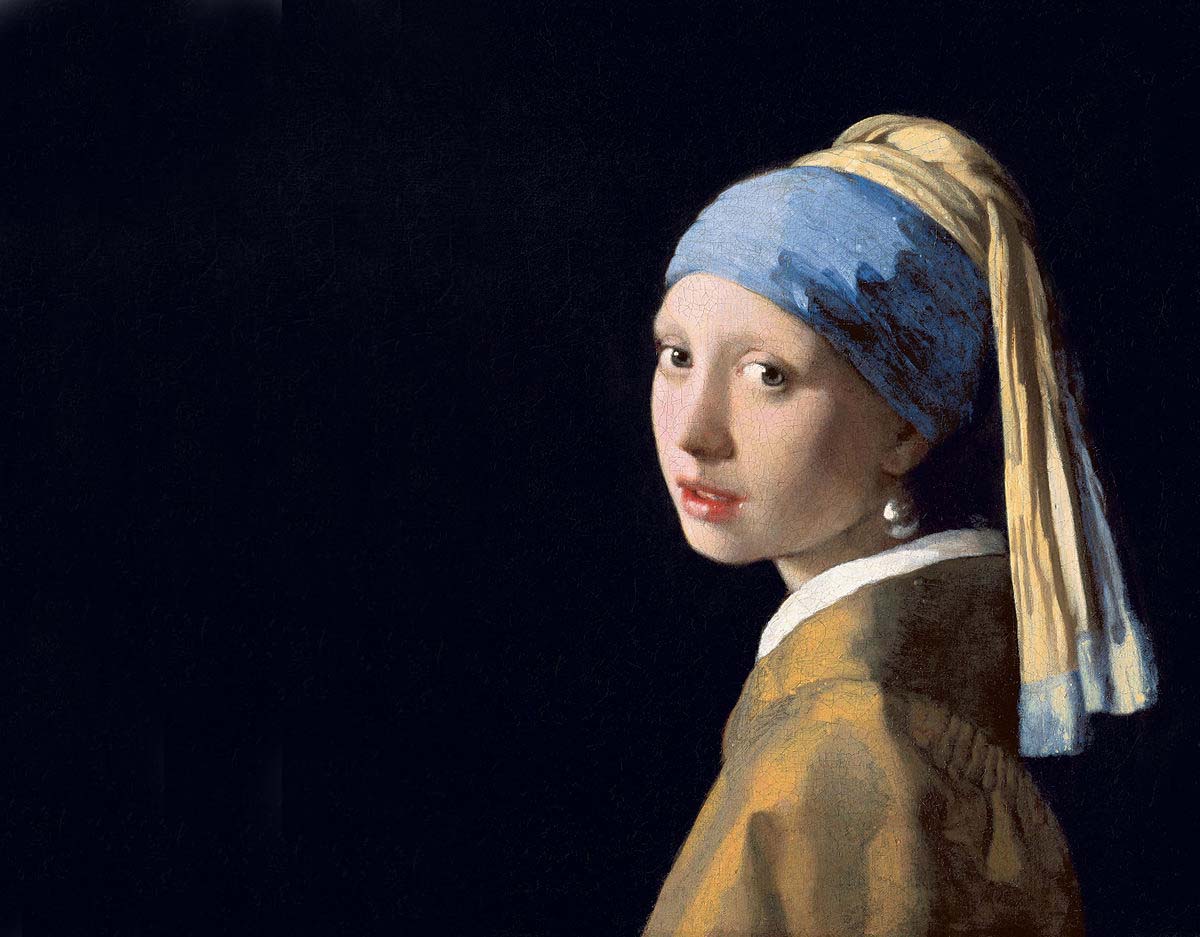
The painting


The painting is signed "IVMeer" but not dated. It is estimated to have been painted around 1665.

That is all wrong, if one is to suppose that Volkje was the subject of the painting, The Girl with the Pearl Earing by Johannes Vermeer. First, Volkje spent time in Amsterdam, living on Tuinstraat, close to the home and studio of the great painter Rembrandt von Rijn. Vermeer, the painter, lived out his life in the Dutch city of Delft. Lastly, we can guess that Volkje was born in the year 1615, or thereabouts, making her too old for the young girl in the painting.

girl_earing_2
The girl with the pearl earing, by Johannes Vermeer


Saturday, May 25, 2013

Valentine Worley and Lucinda Campbell Van Huss

What moves us?

Our reasons for moving are many. A sense of adventure, fleeing the law, a divorce, a marriage, the hope of a new beginning, our ancestors reasons for moving are varied.

In tracking the Van Huss family tree, I have discovered that the progenitor, Jan Franz Van Husum and his wife Volkje left North Friesland because of  the terrible flood of 1632, a flood that killed tens of thousands, and destroyed the island of Nordstrand where Volkjie lived with her sister and parents. Jan was a sea-going man who lived in the nearby port of Husum.

Eventually, the two made their way to Amsterdam, and in 1642, sailed on a ship to New Holland, and up the Hudson to the area that would one day encompass the city of Albany. Generations lived in New York, then made their way to Pennsylvania, lured by the promise of land, and from there to North Carolina and Virginia, again lured by the promise of new land.

One Valentine Felty Van Huss crossed the Appalachian Mountains and settled in Carter County, Tennessee, though at the time, it was still part of Virginia. Valentine had a son similarly named, and he had a son named Mattias. And he had a son named Valentine Worley Van Huss, raised by a much loved step mother, Lavinia Dugger.

It was this Van Huss who crossed the wide prairie with his sons and came to Kansas to eventually settle Butler County.

This post is a loose end.

Valentine Worley Van Huss


Valentine Worley Van Huss was the only child of Mathias Van Huss and Elizabeth Worley, who died giving birth. Mathias remarried and had several children with his new wife Lavina Dugger. This family lived in Elizabethton, Tennessee.

In the 1880's Valentine Worley Van Huss, his wife Lucinda and several children Tennessee for Kansas. Valentine and Lucinda and his wife Lucinda first lived near Stilwell in Johnson County, Kansas. Lucinda died there as she is buried in the Aubrey cemetery. (On Highway 69 south of Overland Park, take the 191st street exit, go east a short distance.)

 VanHuss, Lucinda R,
 15 Apr 1818 - 20 Oct 1870
 Wife of V W VanHuss,
  Old Sec, Row 12
 Aubrey Cemetery.

Valentine Worley Van Huss moved on to Butler County along with his sons. He died there in 1909 and is buried in Little Walnut Glencoe Cemetery next to his son Isaac.

son Isaac and father Valentine Worley Van Huss, Little Walnut Glencoe Cemetery